
MSAs are the foundation of building any working network, allowing interoperability and high performance. Building a multi-source agreement requires knowledge of key fiber specifications and routing protocols. This helps builders find the appropriate cables, transceivers and equipment needed for the network to function to the best of its potential.
For builders and system integrators, more than just a passing knowledge is required, as they can locate the best equipment and accessories needed to create high-performance and multi-vendor networks.
Defining MSAs and Their Importance
Essentially, Multi-Source Agreements are technical documents that use different equipment that must operate using the same electrical standards. If the hardware and physical standards don’t match, then the MSA cannot work. And just like that, interoperability is born.
Of course, there are many workarounds and widely adopted models such as those from groups like the IEEE or ITU. Because they’re practical, widely adopted, and built around real-world deployment needs, they’ve become the de facto standard for everything from transceivers to passive optical components.
Areas the MSAs Cover
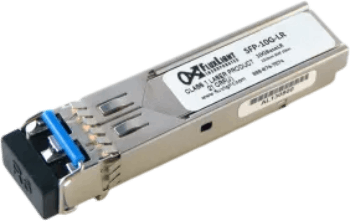
Most MSAs are written to define form factors, such as SFP, SFP+, QSFP, QSFP-DD, OSFP, and others. Each of these form factors comes with a published MSA document that outlines physical dimensions, host electrical interface specs, optical interface expectations, mechanical tolerances, and sometimes even power budgets.
An SFP+ MSA has specific requirements where the module length, placement of the latch, pin arrangement and supported signal levels are concerned. These will define the accessories and equipment you can use. You may find that the solutions from one vendor may fit, but another may have different physical parameters or signal standards. Another key factor to look out for is the thermal specifications. An MSA may also include thermal specifications, recommended operating temperatures, and required management interfaces, such as I2C access for reading diagnostic information.
Why MSAs Matter in Practice
For engineers and builders working in real networks, not lab environments, MSAs are indispensable. They reduce integration risk and increase procurement flexibility. When your infrastructure is built with MSA-compliant components, you’re not tied to a single vendor. You can source optics based on availability, performance, and cost, instead of being locked into proprietary solutions.
They also simplify the task of qualifying hardware. You can safely assume that MSA-compliant components will at least fit and communicate with one another, even if deeper firmware compatibility still needs to be validated.
And for large-scale environments, data centers, ISPs, telcos, and MSAs are what allow infrastructure to scale. You can plan long-term roadmaps around standard form factors, swap out modules as speed demands increase, and trust that next-generation modules will follow the same general rules.
What MSAs Don’t Guarantee
Though an MSA may not assure or govern a firmware’s behavior, transceivers could be MSA compliant but fail to operate in a switch because the vendor has put in custom firmware. Some switches even reject third-party optic transceivers from working, even when they fulfill MSA specs. This kind of lockout gets implemented through some vendor coding or digital key checks.
MSAs also do not dictate how diagnostics, alarms, or power-saving capabilities operate. Modules from one vendor might support extended temperature monitoring or advanced link tuning, while those from another might not; yet both modules actually obey the same form factor.
Pragmatic Considerations for Builders
First, always verify transceiver specs in detail. Two optics claiming to follow the same MSA may still differ in important ways: temperature ranges, optical launch power, receive sensitivity, or firmware behavior. Reading the fine print matters, especially when your network is running near its limits.
Second, test everything. Just because a module meets the MSA doesn’t mean it’s plug-and-play in your gear. There may be quirks in how a switch negotiates link parameters or handles diagnostics. A controlled test lab, where you can validate optics under real network conditions, is essential.
Third, work with vendors who understand and support re-coding. Some providers can adjust the EEPROM of a transceiver to match a specific switch’s expected vendor ID. This can unlock major cost savings, especially in environments that need hundreds or thousands of identical optics.
MSAs and CMIS – The New Era of Transceiver Management
With growing transceiver speeds and complexity, there is a need for a higher grade of management. Enter CMIS, or Common Management Interface Specification. Created in conjunction with QSFP-DD, CMIS defines how modules communicate with host devices beyond the basic monitoring paradigm.
Most modern MSAs nowadays assume CMIS support or at least encourage it. If you are deploying optics at 100G or faster, it would be a good idea to check for the support of CMIS from both your switch and your transceivers. That way, you get better visibility into real-time performance metrics, temperature data, fault conditions, etc., and that’s something large high-speed networks definitely need.